
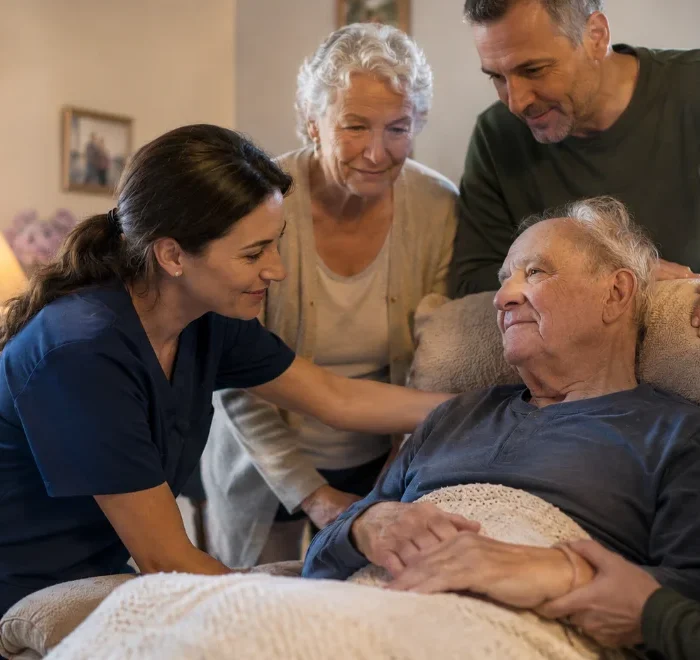
A family gathers quietly in the living room while their father rests nearby in his favorite chair. His breathing has become more difficult over the last few weeks, and emotions are running high. The family wants reassurance that someone will be available when symptoms change, questions arise, or fear suddenly sets in during the middle of the night.
This is one of the reasons patient-to-nurse ratios matter so deeply in hospice care. Families need more than occasional check-ins. They need attentive, compassionate support from caregivers who have the time and availability to truly be present. At Allelon Hospice, we understand that quality hospice care depends heavily on the relationships and responsiveness families receive during this important season of life.
What Patient-to-Nurse Ratios Mean in Hospice Care
Patient-to-nurse ratios refer to the number of patients each hospice nurse is responsible for caring for at one time. While many families may not think to ask about staffing levels, these ratios can significantly affect the overall quality of hospice care.
When nurses are responsible for too many patients, it becomes harder to provide personalized attention. Visits may feel rushed, communication can become limited, and families may struggle to get timely answers during stressful moments. In hospice care, where comfort and emotional support matter deeply, that lack of availability can create additional anxiety for everyone involved.
Balanced patient-to-nurse ratios allow hospice nurses to spend meaningful time with patients and families. They can monitor symptoms carefully, answer questions thoroughly, and provide emotional reassurance without constantly feeling pressured to move on to the next visit.
At Allelon Hospice, we maintain a nurse-to-patient ratio of approximately 10:1, allowing our nurses to provide more attentive and personalized hospice care. Lower patient loads help create more meaningful interactions, quicker responses to changing needs, and stronger support for families navigating difficult moments.
Families often notice the difference immediately. Instead of feeling like another number on a schedule, they feel heard, supported, and cared for by professionals who are fully present during difficult conversations and emotional moments. Families can also learn more about our full range of hospice services designed to support comfort and dignity during every stage of care.
Why Personalized Attention Makes a Difference
No two hospice journeys are exactly alike. Every patient has unique symptoms, emotional needs, family dynamics, and personal wishes. Hospice care works best when caregivers have enough time to truly understand those individual needs and respond thoughtfully.
At Allelon Hospice, we believe compassionate care starts with listening. Nurses need time to notice subtle changes in comfort levels, educate family members, and build trust with patients who may feel vulnerable or uncertain. Smaller patient loads help create space for those meaningful interactions.
Families facing end-of-life care are often emotionally exhausted before hospice even begins. Adult children may be balancing caregiving with careers and parenting responsibilities. Spouses may feel overwhelmed by fear, grief, and physical exhaustion. Personalized hospice care helps reduce some of that emotional weight by creating a dependable source of support.
Strong nurse availability also improves communication. Families should never feel hesitant to ask questions or reach out when concerns arise. Whether discussing pain management, emotional changes, or next steps, responsive communication helps families feel more confident and less isolated throughout the process. Families looking for guidance can also explore helpful information about when hospice care may be appropriate for their loved one.
Many families also benefit from understanding the difference between palliative care and hospice care when making important healthcare decisions for a loved one facing serious illness.
The emotional driver behind this issue is simple. Families want reassurance that their loved one matters. They want to know the people providing care have the time and ability to respond with compassion, patience, and attention.
How Better Hospice Care Supports Comfort and Quality of Life
Hospice care focuses on helping patients experience dignity, comfort, and peace during a serious illness. Proper staffing plays a major role in making that possible.
When nurses can spend adequate time with patients, symptom management often becomes more effective. Changes in pain levels, breathing patterns, appetite, or discomfort are recognized more quickly, allowing the care team to respond promptly and appropriately. This helps patients remain as comfortable as possible while reducing unnecessary stress for families.
Quality hospice care also includes emotional and spiritual support. Patients may want to talk about fears, relationships, faith, or unfinished conversations. Families may need reassurance or guidance while navigating grief and uncertainty. These conversations cannot be rushed.
At Allelon Hospice, our interdisciplinary team works together to support the whole person, not just medical needs. Nurses, chaplains, social workers, and other caregivers collaborate closely to ensure patients and families receive compassionate support tailored to their unique situation. Our team also provides bereavement support services to help families navigate grief after the loss of a loved one.
This kind of attentive care becomes especially important during moments of change. Families often feel frightened when symptoms shift unexpectedly or when they are unsure what to expect next. Having an accessible hospice team helps reduce panic and creates greater peace of mind during emotionally difficult moments. Families can also review common hospice care Frequently Asked Questions at the bottom of this blog to better understand what to expect throughout the care journey.
One of the greatest gifts hospice care can provide is the ability for families to focus on meaningful time together rather than constant medical stress.
Signs Families Should Look for in a Hospice Provider
Choosing a hospice provider is a deeply personal decision, and staffing support should absolutely be part of that conversation. Families deserve to understand how care is delivered and whether the provider prioritizes responsiveness and personalized attention. At Allelon Hospice, we maintain a nurse-to-patient ratio of approximately 10:1, which is considered lower than many hospice providers. This allows our nurses to spend more time supporting patients and families with attentive, relationship-centered care.
When speaking with a hospice provider, families may want to ask questions such as:
- How often will nurses visit?
- How quickly can someone respond after hours?
- How does the team communicate with families?
- Will we see familiar caregivers consistently?
- How are care plans adjusted when needs change?
These questions help families better understand what day-to-day support may actually feel like.
At Allelon Hospice, we believe families deserve care that feels personal, compassionate, and dependable. Our faith-centered approach guides how we serve patients throughout Pueblo and Southern Colorado. We focus on building genuine relationships and providing support rooted in dignity, compassion, and integrity. Families can also review our approach to in-home hospice care to better understand how support is delivered in familiar surroundings.
Families also benefit from knowing support continues beyond medical care itself. Bereavement support for loved ones after a patient’s passing can provide comfort and guidance during the grieving process, helping families feel supported even after hospice services conclude.
Compassionate Hospice Care Requires Presence
Hospice care is about far more than managing symptoms. It is about helping people feel cared for, valued, and supported during one of life’s most emotional experiences. That level of care requires presence, time, and human connection.
Patient-to-nurse ratios directly affect whether hospice teams can provide the kind of attentive care families deserve. When caregivers have the ability to spend meaningful time with patients, relationships grow stronger, communication improves, and families often feel greater peace during difficult circumstances.
At Allelon Hospice, we believe compassionate hospice care means showing up fully for patients and families when they need support most. We are available 24 hours a day, 365 days a year because families should never feel alone while navigating serious illness and end-of-life care.
Choosing hospice care is never an easy decision, but the right support can make the journey feel less overwhelming. Families deserve caregivers who have both the skill and the time to provide comfort, guidance, and compassionate attention throughout every stage of care.
Ready to get answers and find peace of mind? Contact Allelon Hospice today — we’re here to walk this road with you.
https://allelonhospice.com/hospice/
Frequently Asked Questions:
Why do patient-to-nurse ratios matter in hospice care?
Patient-to-nurse ratios affect how much time and attention nurses can give each patient and family. Lower ratios often allow for more personalized care, stronger communication, and quicker responses to changing needs.
How does hospice care support families emotionally?
Hospice care provides emotional guidance, reassurance, and compassionate communication throughout the care journey. Families often feel less isolated when experienced professionals help them navigate difficult moments.
What should families ask when choosing a hospice provider?
Families should ask about nurse availability, after-hours support, communication practices, and how care plans are managed. These conversations help families understand the level of personalized care they can expect.
Can hospice care happen at home?
Yes, hospice care is commonly provided wherever the patient calls home. This may include private residences, assisted living communities, or nursing facilities.
How does personalized hospice care improve comfort?
Personalized hospice care allows caregivers to respond more quickly to symptom changes and individual preferences. This helps improve comfort, dignity, and overall quality of life for patients.
Does hospice care only focus on medical needs?
No, hospice care also addresses emotional and spiritual support for both patients and families. Compassionate care involves supporting the whole person, not just physical symptoms.
What services are included in hospice care?
Hospice services may include nursing care, pain management, spiritual support, social work services, medication coordination, and bereavement support for families after a loved one passes away.
How quickly can hospice teams respond during emergencies?
Hospice providers typically offer after-hours support for urgent concerns or symptom changes. At Allelon Hospice, families have access to support 24 hours a day, every day of the year.
Why is communication important in hospice care?
Clear communication helps families feel informed, reassured, and supported throughout difficult situations. Consistent updates and accessible caregivers often reduce stress and uncertainty for loved ones.